
Right Size Guide
Rug Size Calculator
This rug size calculator helps you find the right rug size for your living room, bedroom, dining room, or entryway based on your room measurements and furniture layout.
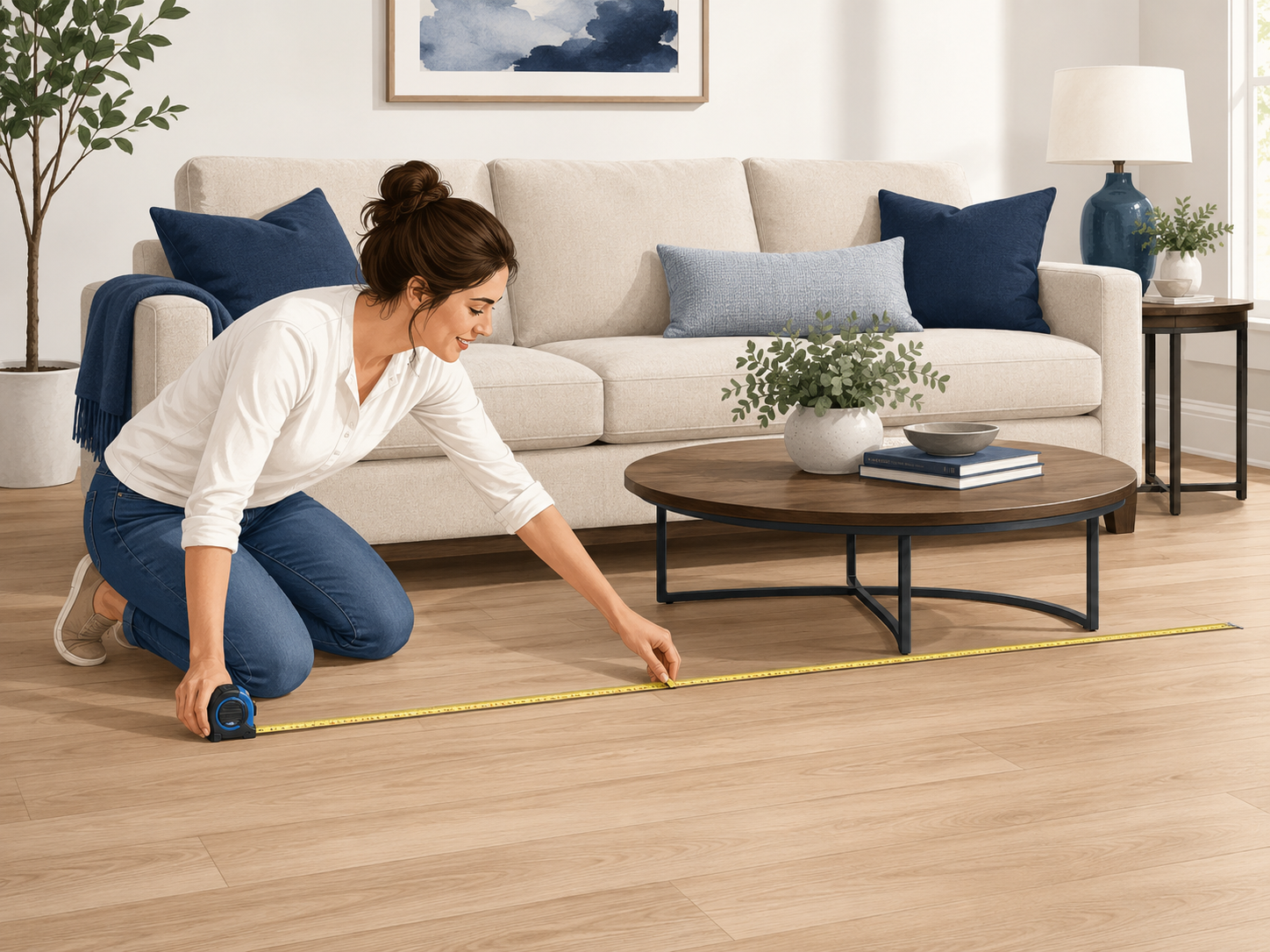
Quick Calculator
Find The Right Rug Size For Your Room
Enter your room size and choose the room type. The rug size calculator will suggest a practical rug size range and common rug sizes that may work for your space.
Rug Size Calculator
Enter your measurements and choose the room setup.
Your Rug Size Results Will Appear Here
Add your room measurements, choose your room type, and click calculate.
Before You Buy
How To Measure For A Rug
Measure the area where you want the rug to sit, not just the full room. For most rooms, the rug should help anchor the furniture instead of floating alone in the middle of the floor.
Measure the width and length of the room or seating area.
Decide whether the rug should sit under all furniture, front legs only, or just under the main table.
Leave a visible border of floor around the rug when possible.
Visual Guide
Common Rug Sizes At A Glance
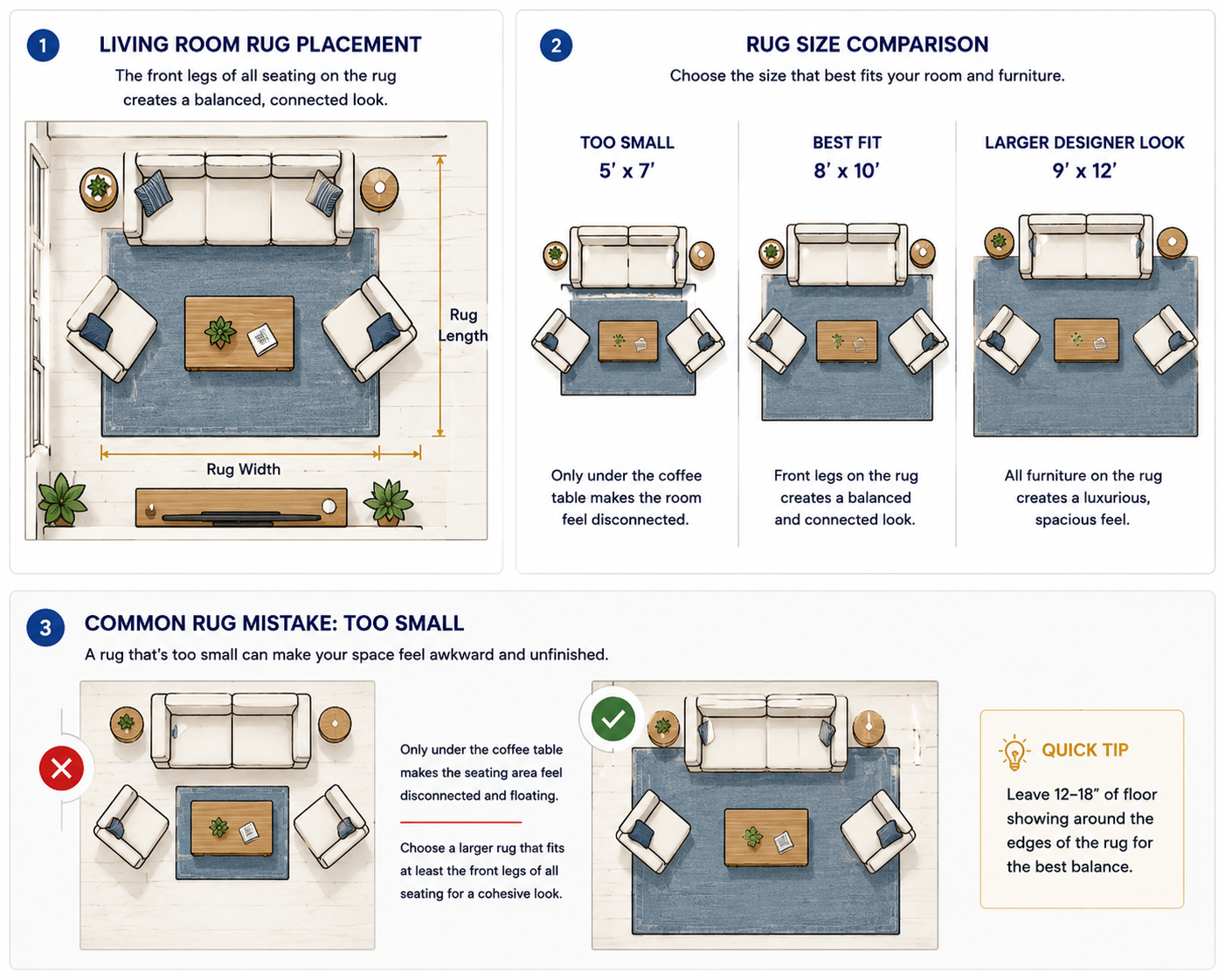
Use this rug size chart as a quick reference when comparing standard rug sizes for living rooms, bedrooms, dining rooms, and entry spaces.
Placement Guide
Rug Placement Tips By Room
The right rug size depends on the room and the furniture around it. A rug that is too small can make a room feel disconnected, while a larger rug can help the space feel more finished.
| Room | Helpful Rug Size Starting Point |
|---|---|
| Small Living Room | 5×7 or 6×9 |
| Average Living Room | 8×10 |
| Large Living Room | 9×12 or larger |
| Queen Bedroom | 8×10 |
| King Bedroom | 9×12 |
| Dining Room | Table size plus 24 to 36 inches on each side |
For another helpful reference, Rugs Direct has a rug size guide that explains common rug sizes by room and suggests leaving about 6 to 18 inches between a rug and the walls. Read Rugs Direct’s rug size guide.
Simple Rules
How To Choose A Rug Size Without Overthinking It
A good rug should help the room feel connected. The goal is not just to cover the floor. The goal is to make the furniture layout feel intentional and balanced.
Living Rooms
Choose a rug large enough for at least the front legs of the main furniture to sit on it.
Bedrooms
Choose a rug that extends beyond the sides and foot of the bed so it feels soft and balanced.
Dining Rooms
Choose a rug large enough so chairs stay on the rug when pulled out from the table.
Common Questions
Rug Size Calculator FAQs
What Size Rug Is Best For A Living Room?
For many living rooms, an 8×10 rug works well. Smaller rooms may use a 5×7 or 6×9 rug, while larger rooms often look better with a 9×12 rug or bigger.
Should My Sofa Sit On The Rug?
Usually, yes. A common layout is to place at least the front legs of the sofa and chairs on the rug. This helps connect the seating area and makes the room feel more intentional.
How Much Floor Should Show Around A Rug?
In many rooms, leaving about 12 to 24 inches of visible floor around the rug creates a balanced look. Smaller rooms may need less floor showing.
What Size Rug Goes Under A Dining Table?
A dining room rug should usually extend about 24 to 36 inches beyond each side of the table so chairs can stay on the rug when pulled out.
Is A Rug That Is Too Small Really A Problem?
A small rug can make furniture feel disconnected. If the room feels unfinished or the rug looks like it is floating, sizing up usually helps.