
Moving & Storage Size Guides
Moving & Storage Guides
Find the right truck size, storage unit size, moving box size, and packing setup before you start loading, renting, or booking anything.
Moving and storage can get expensive fast when the size is wrong. A truck that is too small means extra trips. A storage unit that is too large wastes money every month. A box that is too big becomes impossible to lift without a dramatic soundtrack.

Start Here
What are you trying to size?
Choose the guide that matches the decision you are making today. These pages are built to help you measure, compare, and avoid buying or renting the wrong size.
Moving Truck Size Guide
Estimate the truck size you need based on home size, rooms, furniture, and moving distance.
Storage RentalStorage Unit Size Guide
Compare common storage unit sizes and see what usually fits inside each one.
PackingMoving Box Size Guide
Learn when to use small, medium, large, wardrobe, dish, book, and specialty boxes.
SuppliesMoving Supply Calculator
Estimate boxes, tape, bubble wrap, packing paper, labels, and other supplies.
Guides & Calculators
Moving and storage size guides
These guides help you think through space, weight, item size, access, and packing before you commit to a rental.
Moving Truck Size Guide
Use this guide when you are choosing between common moving truck sizes. It helps you compare truck space by home size, furniture amount, and how tightly you plan to pack.
Open the moving truck guide
Storage Unit Size Guide
Use this guide before renting a storage unit so you can compare 5×5, 5×10, 10×10, 10×15, 10×20, and larger spaces without guessing.
Open the storage unit guideMoving Box Size Guide
Pick the right box size for books, kitchen items, linens, décor, clothes, and fragile pieces.
Packing Box Calculator
Estimate how many boxes you may need based on rooms, closets, and how much stuff you have.
Moving Container Size Guide
Compare portable storage containers and moving pods before choosing a size.
Rental Truck Loading Guide
Learn how to load heavy furniture, boxes, mattresses, and fragile items more efficiently.
Storage Unit Organization Guide
Plan aisles, labels, shelves, stack height, and access so your unit does not become a cardboard cave.
Appliance Moving Size Guide
Measure refrigerators, washers, dryers, ranges, and freezers before moving day.
Mattress Bag Size Guide
Choose the right mattress bag size for twin, full, queen, king, and California king mattresses.
Moving Blanket Size Guide
Figure out how many moving blankets you may need for furniture, mirrors, tables, and appliances.
Self Storage Size Chart
Compare common storage unit sizes in one quick chart before choosing a rental.
Visual Guide
Quick moving and storage size reference
Use this visual guide as a fast starting point for truck sizes, storage unit sizes, box types, and packing basics.
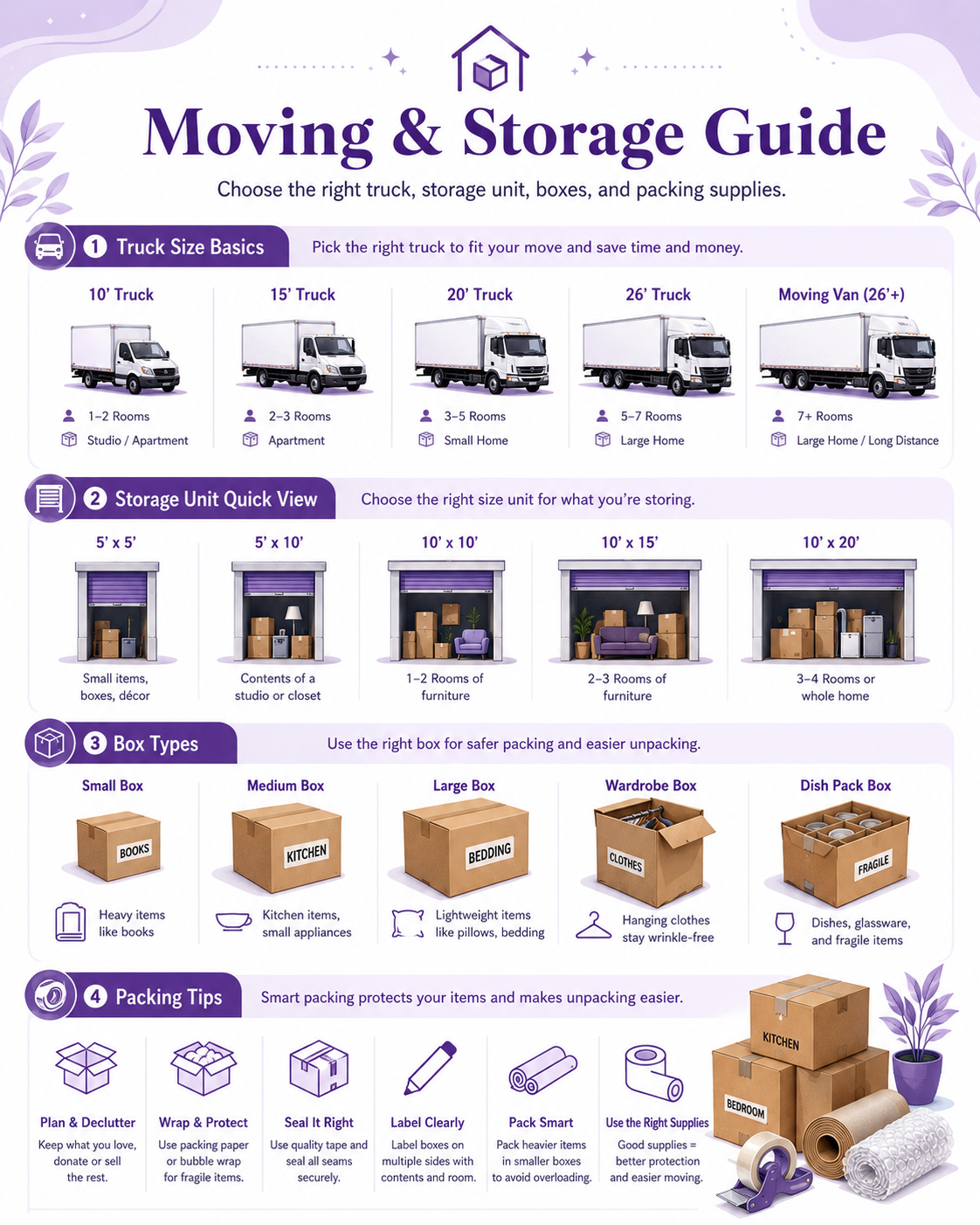
Better Sizing
Why moving and storage sizes are easy to get wrong
Most people estimate by room count, but room count alone can be misleading. A small apartment with a sectional, king bed, garage shelves, and outdoor furniture may need more space than a larger home with fewer bulky items.
The better way is to think in layers: large furniture first, then boxes, then awkward items, then access space. If you need to reach holiday decorations, tools, documents, or seasonal clothing later, do not pack your storage unit like a brick wall.
Before you rent, check:
- How many large furniture pieces need floor space
- Whether mattresses, sofas, and appliances can stand upright safely
- How many boxes you expect to stack
- Whether you need walking space inside a storage unit
- Whether stairs, elevators, driveways, or tight turns affect the move
- Whether you are moving once or making several smaller trips
Simple Rules
Quick moving and storage size tips
These are not replacements for the full guides, but they can help you avoid the most common sizing mistakes.
Choose a little extra space for storage access
If you need to retrieve items later, leave a narrow aisle. A perfectly packed unit is great until the one thing you need is in the back corner under seven boxes.
Do not put books in large boxes
Heavy items belong in smaller boxes. Large boxes are better for lighter items like linens, pillows, and bulky but soft household goods.
Measure bulky items before truck day
Sofas, mattresses, dining tables, refrigerators, and dressers can change your size estimate quickly, especially if they cannot be disassembled.
Think about load order
A truck or unit can technically have enough volume and still be hard to use if heavy, fragile, and awkward items are loaded in the wrong order.
Storage Tip
Plan the storage layout before everything goes in
A storage unit is easier to use when you group similar items together, label boxes on more than one side, and keep items you may need near the front. Shelving can also help protect boxes from crushing and make better use of vertical space.
Read Storage Unit GuideAvoid This
Common moving and storage mistakes
Renting based only on square footage
Storage units are often described by floor size, but usable space also depends on height, stackability, furniture shape, and whether you need access.
Forgetting oddly shaped items
Lamps, bikes, patio furniture, mirrors, rugs, tools, and exercise equipment can take up more space than expected because they do not stack neatly.
Choosing the smallest truck to save money
A smaller truck can cost more in the end if it adds fuel, time, extra trips, or the need to rent again. Tiny savings love turning into chaos confetti.
Overpacking large boxes
Large boxes are tempting, but they can become too heavy, split open, or make unloading harder. Use box size based on weight, not just volume.
Helpful Outside Resource
Planning an interstate move?
For interstate moves, the Federal Motor Carrier Safety Administration has consumer resources, mover registration tools, and moving checklist information.
FAQ
Moving & Storage FAQs
What is the best place to start if I do not know what size truck I need?
Start with the Moving Truck Size Guide. It helps you compare truck sizes by home size, room count, and large furniture pieces. If you have a lot of bulky items, use the larger estimate instead of the smallest possible option.
How do I know what size storage unit to rent?
Start with the Storage Unit Size Guide and list your large items first. Then estimate your boxes and decide whether you need walking space. If you will need to access items during storage, do not choose a unit that only works when everything is packed wall to wall.
Should I choose a larger moving truck than the calculator suggests?
Choose the larger option if you have oversized furniture, garage items, outdoor equipment, lots of boxes, or a long-distance move where extra trips are not practical.
What boxes should I use for heavy items?
Use small boxes for books, canned goods, tools, dishes, and other heavy items. Medium and large boxes are better for lighter household goods such as linens, pillows, towels, and décor.
Are moving and storage calculators exact?
No calculator can know every item in your home, but a good guide can get you much closer than guessing. Always adjust for bulky furniture, unusually full closets, garage items, basement storage, and anything that cannot be stacked.
Why does access space matter in a storage unit?
Access space matters if you plan to retrieve items later. A slightly larger unit with a narrow aisle can be more useful than a smaller unit packed completely full.