
Right Size Guide • Pets
Pets Size Guide
Find the right size crate, bed, collar, harness, carrier, bowl, litter box, and everyday pet essentials before you buy.
Pet sizing can be confusing because pets do not all fit neatly into one chart. A dog may be long but lightweight. A cat may need more turning space than expected. A puppy may outgrow a collar faster than you planned. This Pets Size Guide helps you choose practical sizes based on comfort, safety, body measurements, and how your pet actually lives at home.
Start Here
Pet Sizing Should Be Comfortable, Safe, and Practical
The right pet size is not always the biggest size available. A crate that is too large may feel less secure. A bed that is too small may go unused. A collar that is too loose can slip off. A carrier that is too cramped can make travel stressful. The goal is to choose sizes that fit your pet’s body, habits, and daily routine.
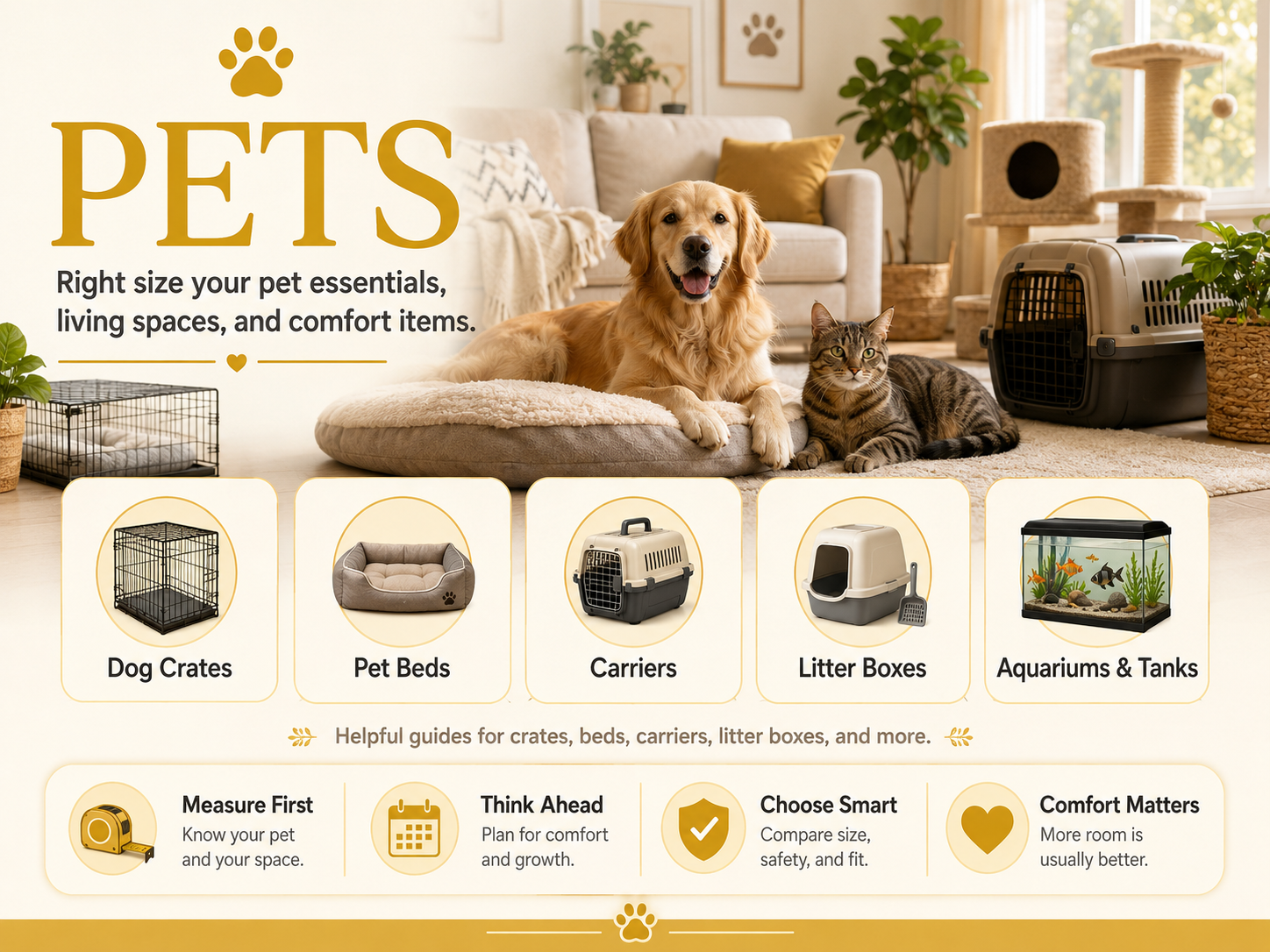
Measure First
Use your pet’s length, height, neck, chest, or weight instead of guessing by breed alone.
Plan for Movement
Pets need room to sit, stand, turn, stretch, curl up, and rest naturally.
Match the Purpose
A travel carrier, sleep crate, pet bed, harness, and food bowl all have different sizing rules.
Better Choices
Use Pet Guides Before You Buy
Pet products can look simple online, but the wrong size can lead to returns, frustration, or items your pet refuses to use. A little measuring before buying can help you avoid crates that feel awkward, beds that are ignored, collars that do not fit, and carriers that are hard to use.
This hub brings together pet sizing guides for everyday home use, travel, training, grooming, safety, and comfort.
Pet Size Guides
Choose the Right Size for Your Pet
Start with the guide that matches what you are buying. These guides are built to help you measure correctly, compare sizes, avoid common mistakes, and choose a product that actually works for your pet.
Dog Crate Size Guide
Find the right crate size based on your dog’s length, height, comfort, and how the crate will be used.
Open GuideDog Bed Size Guide
Choose a bed that gives your dog enough space to curl up, stretch out, and rest comfortably.
View GuideDog Collar Size Guide
Learn how to measure neck size and choose a collar that is secure without being too tight.
View GuideDog Harness Size Guide
Use chest and neck measurements to find a harness that fits safely for walks, training, and travel.
View GuideDog Coat Size Guide
Measure length, chest, and neck so dog sweaters, raincoats, and winter coats fit correctly.
View GuideDog Muzzle Size Guide
Measure snout length and circumference to choose a muzzle that allows safe, comfortable breathing.
View GuideCat Carrier Size Guide
Pick a carrier that gives your cat enough space while still feeling secure during vet trips and travel.
View GuideCat Litter Box Size Guide
Find a litter box size that fits your cat’s body, turning space, entry height, and room layout.
View GuideCat Bed Size Guide
Choose a cat bed based on your cat’s sleeping style, body length, curl space, and favorite resting spots.
View GuideCat Collar Size Guide
Measure neck size and choose a collar that fits securely while allowing safe movement.
View GuidePet Carrier Size Guide
Compare carrier sizing for small dogs, cats, puppies, kittens, and everyday travel needs.
View GuidePet Bowl Size Guide
Choose food and water bowl sizes based on pet size, feeding routine, mess level, and available space.
View GuidePet Gate Size Guide
Choose a pet gate height and width that fits your doorway, stair opening, room layout, and pet size.
View GuidePet Door Size Guide
Find the right flap height and opening size so your dog or cat can pass through comfortably.
View GuideDog Ramp Size Guide
Compare ramp length, slope, width, and weight limit for couches, beds, cars, and stairs.
View GuideMeasuring Tips
Common Pet Measurements You May Need
Different pet products use different measurements. Before buying, check the product’s size chart and compare it to your pet’s real measurements.
Length
Usually measured from the nose, chest, or base of the neck to the base of the tail, depending on the product.
Height
Often measured from the floor to the top of the head, ears, or shoulders when sitting or standing.
Neck
Used for collars, harnesses, sweaters, coats, recovery cones, and some grooming products.
Chest
Usually the widest part of the ribcage, especially important for harnesses, coats, and clothing.
Weight
Helpful for carriers, crates, beds, bowls, ramps, gates, and product safety limits.
Behavior
A pet that stretches out, curls tightly, chews, jumps, hides, or travels often may need a different size.
Avoid These
Common Pet Sizing Mistakes
Buying by Breed Alone
Breed can help, but two pets from the same breed can have very different body shapes, weights, heights, and comfort needs.
Choosing the Biggest Size Automatically
Bigger is not always better. Some items need a secure fit, especially crates, carriers, collars, harnesses, ramps, and gates.
Ignoring How Your Pet Sleeps
A pet that stretches out may need a larger bed than a pet that curls tightly, even if they weigh the same.
Forgetting Growth Room
Puppies and kittens grow quickly. Some items need adjustable sizing, while others may need to be replaced as your pet grows.
FAQ
Pets Size Guide FAQ
Should I choose pet sizes by breed or measurements?
Measurements are usually more reliable. Breed can give you a starting point, but pets vary a lot in height, weight, chest size, neck size, and body shape.
Is it better to size up for pet products?
Sometimes, but not always. Beds may need extra room, but collars, harnesses, carriers, crates, gates, ramps, and pet doors need a more careful fit for safety and comfort.
How much room should a dog have in a crate?
A dog should usually have enough room to stand, turn around, sit, and lie down comfortably. A crate that is much too large may not feel as secure and can make house training harder for some dogs.
What if my pet is between sizes?
Check the product type first. For adjustable harnesses or collars, the larger size may work if it can tighten properly. For carriers and crates, compare both body measurements and weight limits before deciding.
Do puppies and kittens need full-size products?
Not always. Some products can be adjustable or used with dividers, but others may need to be replaced as your pet grows. It depends on the item and how quickly your pet is growing.
What pet size guides should I start with?
Start with the product you need most. For dogs, the Dog Crate Size Guide is a helpful first guide. For cats, carrier and litter box sizing are especially important everyday choices.